 KNA
KNAKit Design
Define equipment functions and components around learning objectives.
Education
Sets of components and modules for experiments, exercises, and practical engineering projects.

Define equipment functions and components around learning objectives.
Develop and assemble kits for the planned practical activities.
Discuss kit operation and suitable practical activities.
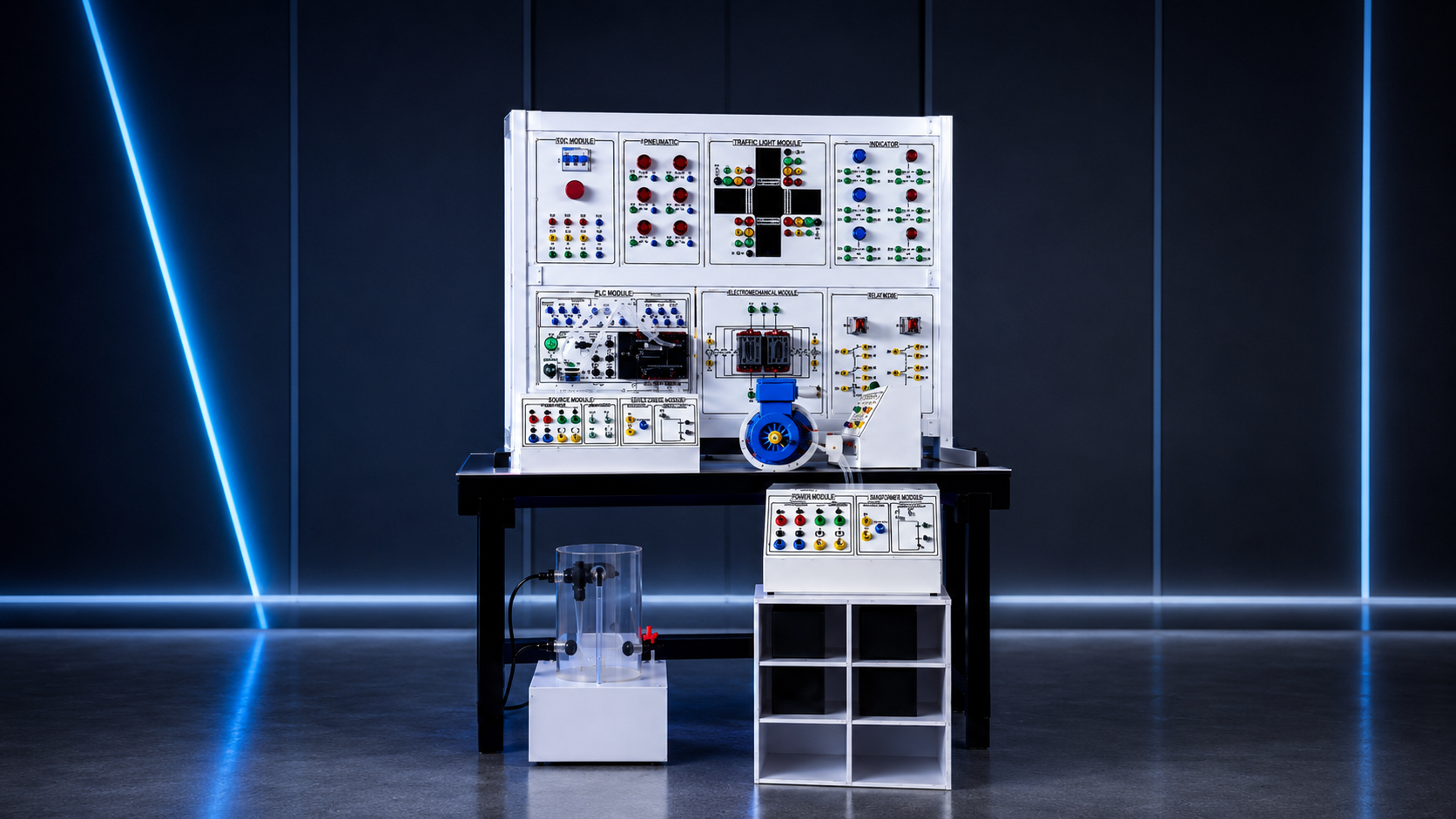
KNA develops education kits that help participants connect components, write programs, measure signals, test functions, and complete projects. Kits can serve vocational schools, universities, laboratories, training centers, and internal company programs.
Education kits emphasize components or modules used in exercises. Teaching aids cover a wider range of learning equipment, including trainers and demonstrators. A kit can also be a teaching aid when its design and material support learning objectives.
Technology is selected for curricula, participant abilities, and intended exercises. Platforms can start with basic experiments and later support student projects, capstones, research, or workforce technology introduction.
Modular designs can separate controllers, sensors, actuators, motors, power, HMIs, and communications. This supports exercise variations and compatible module replacement. Connections, labeling, storage, repeated use, and laboratory facilities need to be considered together.
Kits can include wiring diagrams, system architecture, practical guides, experiment procedures, programming exercises, troubleshooting cases, project assignments, and assessments within scope. Material can progress from basic through intermediate and advanced work to projects.
Platforms can connect to demonstrate a process flow: sensors, controllers, actuators, conveyors, inspection, data, and monitoring. Such integration should follow learning objectives and facilities rather than simply adding complexity. Virtual labs, remote labs, or simulation can be discussed as separate stages when needed.
Initial designs and prototypes check functions and exercises before kits are produced in the agreed quantity. Testing covers experiments, usability, and documentation within scope. Instructor training can be discussed alongside handover.
Share the institution, study program, participant counts and levels, curriculum, practical objectives, preferred technology, existing equipment, laboratory conditions, kit quantities, and timing. Reference photos, catalogs, or specifications can be sent by email or WhatsApp. Configuration, material, quantities, and support are then defined in the proposal.
Share your requirements and goals. The quotation defines the work, deliverables, installation, training, and support included before work begins.